
R-744 in Puerto Rico: a technology that is already closer than we think
By: Agnes Perez, MACS Treasurer
There are refrigerants being developed or introduced to the market that many technicians are still unaware of. These include R-444A, R-456A, R-744, and R-290. While other alternatives may emerge in the future, these refrigerants are already part of the changes taking place in the industry.
In this article, I’m going to focus on one in particular: R-744, also known as CO₂ . This refrigerant has been a surprise to me, especially after finding a vehicle in Puerto Rico that uses this technology.
EPA approval
Specifically, by 2013, the EPA had already established three alternatives that could be used to replace R-134a in certain new vehicles: R-152a, R-1234yf, and R-744. Although they were approved in different years, by that time all three were already part of the alternatives accepted by the EPA.
However, until now, many manufacturers have primarily opted for R-1234yf. This transition proved easier because systems using R-1234yf maintain certain similarities with systems that used R-134a.
Unlike R-1234yf, R-744 had not been widely adopted by vehicle manufacturers. This does not mean that the technology was unknown or unavailable, but rather that its implementation requires a system designed to operate under very different conditions.
The R-744 on the market
By 2024, I had heard reports about the possibility of Audi introducing vehicles with air conditioning systems that used R-744 or CO₂. Although I knew this technology was being evaluated and used in other markets, I didn’t expect to find one of these vehicles in Puerto Rico so soon.
What is R-744?
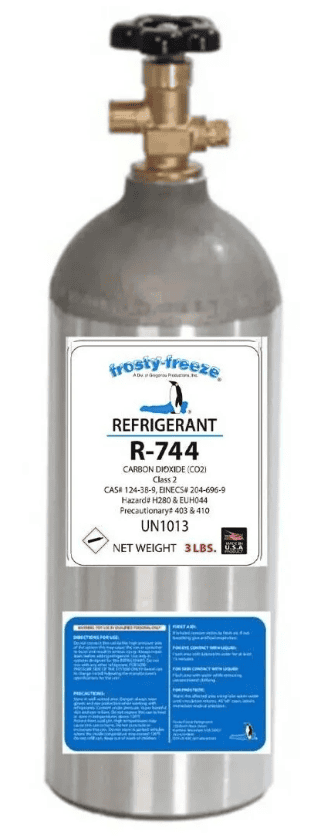
R-744 is carbon dioxide, a substance that occurs naturally in the environment. It is also used as a reference for establishing the global warming potential (GWP) of refrigerants. For this reason, CO₂ is assigned a GWP of 1.
However, the fact that it is a natural refrigerant does not mean that the system is simple or that it can be worked on using the same tools and procedures that we use with other automotive refrigerants.
The difference in pressures
One of the main differences lies in their operating pressures.
On the low-pressure side, we can observe values close to 300 PSI, while on the high-pressure side, pressures can reach approximately 1,800 PSI during normal operation. These values are completely different from those we are accustomed to seeing in systems using R-134a or R-1234yf.
This means that the technician needs to know how the system works, its components, safety procedures, and specific tools before attempting any diagnostics or service.
My experience in the workshop
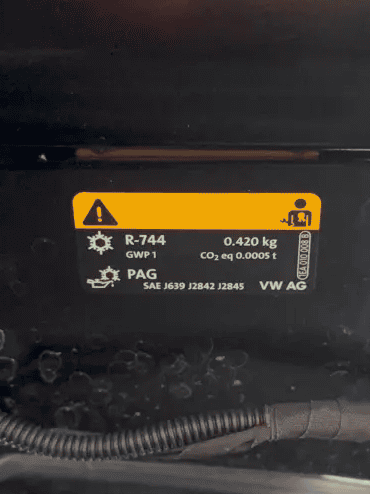
I recently received a call from a technician who was working on a vehicle and couldn’t identify the refrigerant listed on the label. During the conversation, he explained that the system identification read R-744.
Upon hearing what I had found, my first reaction was surprise. Although I knew that some manufacturers were starting to use CO₂ as a refrigerant, I didn’t expect to find one of these vehicles in Puerto Rico so soon.
I immediately wondered: are there really any vehicles in Puerto Rico already using R-744 or CO₂ as a refrigerant?
The answer was emphatic: yes.
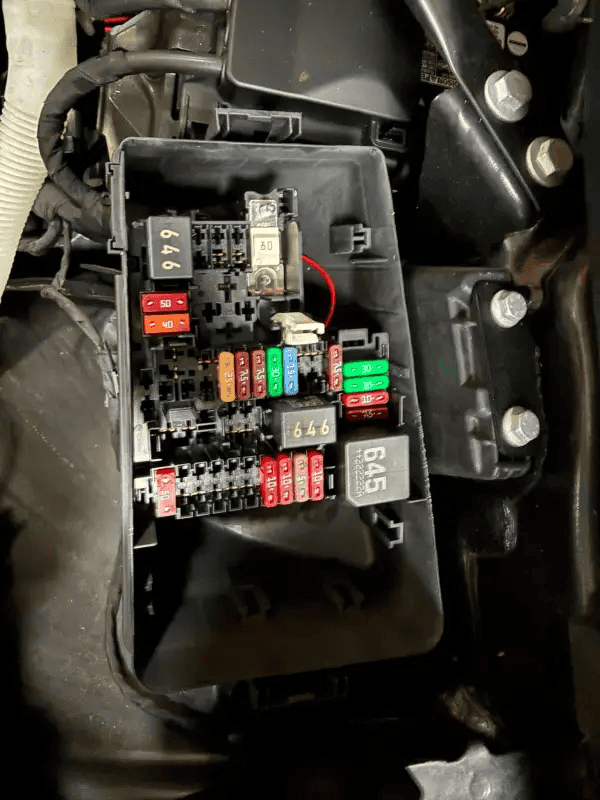
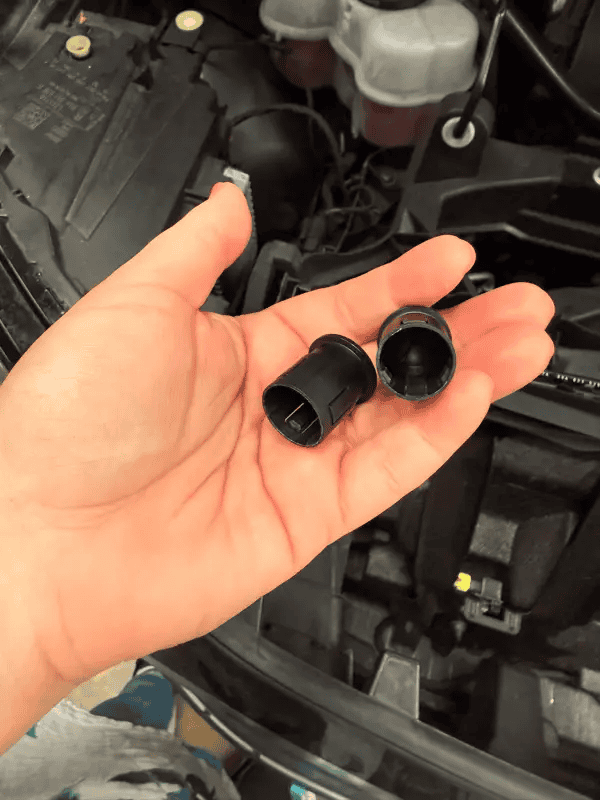
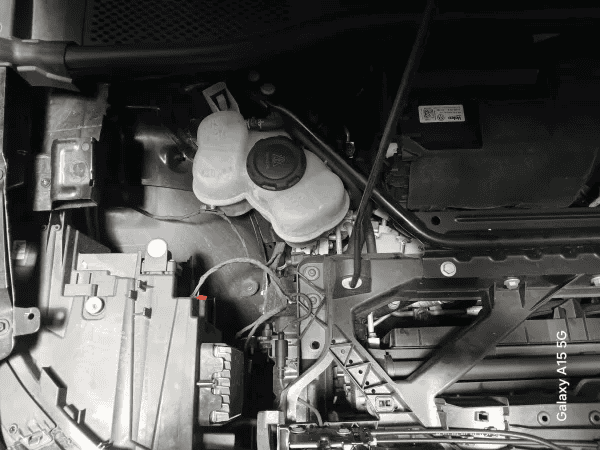
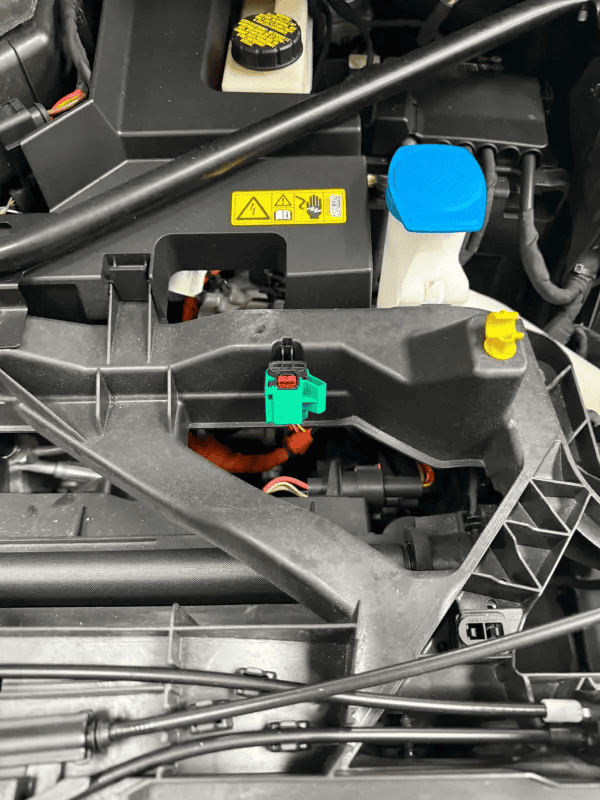
For that reason, I requested permission to visit the premises and personally observe the vehicle. I also had the opportunity to take photographs of the components, labels, and other important details of the system.
This experience confirms something I always tell the technicians: changes in the automotive industry aren’t just a thing of the future. Many of these technologies are already arriving in our workshops.
Below, I share photos of what I found in this vehicle, the differences I observed, and some details that every technician should start knowing about automotive air conditioning systems that use R-744.
What this means
This experience confirms something I always tell the technicians: changes in the automotive industry aren’t just a thing of the future. Many of these technologies are already arriving in our workshops.
If you’re reading this article, it’s probably because you already recognize that the technical landscape is changing. And you’re right.
The R-744 is no exception. It is the beginning of a larger transformation.
That’s why you need to be prepared. It’s not optional. Technicians who master these technologies will be the ones building solid careers in the coming years. Those who don’t will be left behind.
For more details visit Agnes’s website

About the Author: Agnes is a distinguished professional with over 20 years of experience in automotive air conditioning systems and electric vehicles. She holds an Automotive Technician license as well as a Bachelor’s degree and an MBA in Marketing. As the founder of Mecanea tu Día, an educational platform providing seminars, workshops, and certifications, Agnes addresses the modern needs of automotive technicians, focusing on electrification, HVAC systems, and operational management. Her leadership at Auto Air Parts of Puerto Rico has positively impacted over 2,500 mechanics and students. She has also served two terms on the MACS board, contributing significantly to the organization’s development. For her dedication, Agnes has been honored with the Leadership Award Robert Belman Memorial and the Ambassador Award.
Learn More