
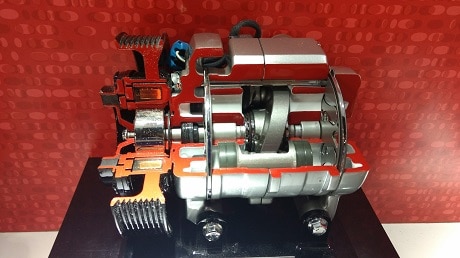

Behavioral characteristics of various compressor types
September 21, 2021
When faced with a challenging A/C system problem, knowing what type of compressor you are dealing with can help streamline the diagnosis process.Read Article >

The cool kids ride air conditioned school buses
September 17, 2021
More and more school districts are requiring their school transport buses to be air conditioned. On blazing hot days, high in humidity, it is a matter of comfort for riders. In the era of COVID-19, filtration of the air is an important matter of safety.Read Article >
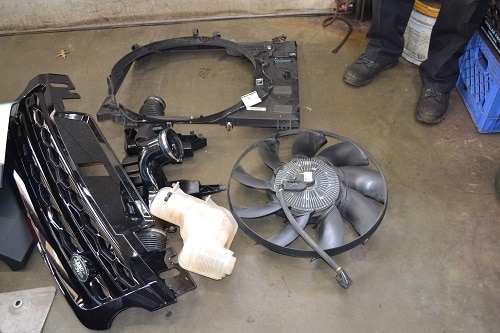
Cooling fan circuit analytics
September 16, 2021
What is Peter Orlando’s class Cooling Fan Circuit Analytics about? It all began decades ago as a mechanical fan attached to the water pump with and without a fan clutch. And now it has evolved into an efficient complex electrical motor control of cooling the modern internal combustion engine.Read Article >

Understanding and diagnosing air conditioning
September 15, 2021
Most of today’s vehicles come equipped with electronically controlled A/C systems. Auto A/C systems have become more difficult to diagnose using the repair strategies learned from years of servicing R-12 and R-134a systems.Read Article >
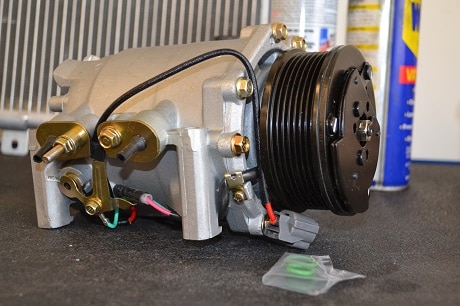
Facts to know about the compressor clutch coil
September 7, 2021
Checking the clutch air gap before installing a compressor is an important step in compressor installation. This is because of the possibility of a clutch air gap getting knocked out of adjustment due to rough handling or it being gapped incorrectly at the factory. These issues of course can cause problems with clutch operation. If detected and corrected before compressor installation, a lot of time can be saved.Read Article >
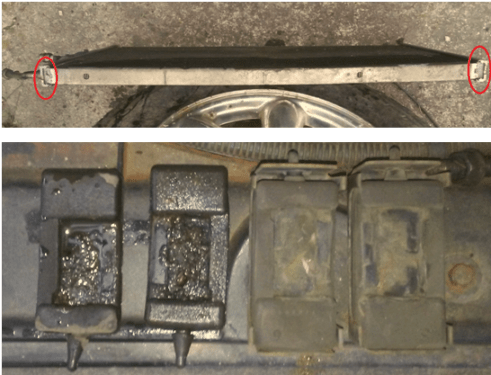
Finding right side up
August 3, 2021
Most condensers have different fittings on the inlet and outlet. The locations of the inlet and outlet on most condensers will not allow lines to be connected incorrectly, even if the fittings do happen to be the same size. Lastly, the designs of the mounts on most condensers prevent a unit from being installed upside down. However, none of these characteristics apply to the condenser the technician had installed.Read Article >
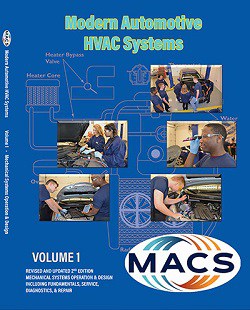
MACS Modern HVAC textbooks in stock for back to school
July 28, 2021
MACS Modern HVAC textbooks are in stock for back-to-school purchase.Read Article >
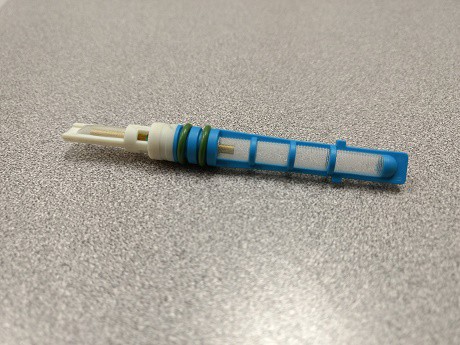
Top three tips on orifice tube behavior
July 20, 2021
In the last four MACS blog articles we covered a lot of detailed information about orifice tube system behavior. We examined a system with a full refrigerant charge verses a 25% undercharge. Now it is time to condense it all down into three important takeaways.Read Article >

Truck A/C is a hot commodity
July 14, 2021
Look out on your local highway, and what do you see? Truckers getting the job done. They want their cabs to be cool in summer and warm in winter. They want the climate system to work right. There is no time for downtime. That is where we come in.Read Article >
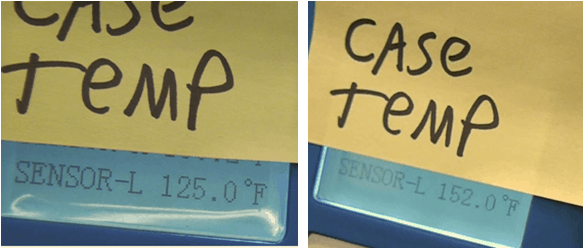
Low refrigerant charge and the search for real data part 4
July 13, 2021
When we examined the pressure readings and vent temperature readings last week, there was nothing showing up that indicated any charge issues (even operating with the 25% undercharge).Read Article >

We can’t wait to see you in person!
July 8, 2021
We are just a little over two months away from the rescheduled 2021 MACS Training Event and Trade Show! We can’t wait to see you in person September 30 through October 2 at the Rosen Centre Hotel in Orlando, FL. The golf tournament will be played on September 29 at the Rosen Shingle Creek Golf Course.Read Article >
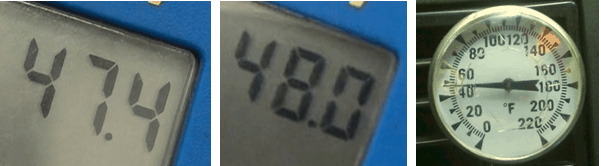
Low refrigerant charge and the search for real data part 3
July 6, 2021
To place as much heat load on the system as possible, we turned the heat in the shop up on high and got it as hot as possible before beginning the test. When the temperature peaked at 89°, we began the test. We tried to keep it constant, but all the heat being generated by the engine in the test vehicle caused it to inch upward by 2.5° before the second test was concluded.Read Article >